Xiegu VG4 vs Traditional OFC Dipole
Why I Ran This Test
Antenna talk is full of opinions, modeling screenshots, and marketing claims. That stuff has its place, but I’m more interested in one question:
So I put both antennas on the air under the same conditions and let FT8 and propagation do the talking.
Test Setup
- Band: 40 meters
- Mode: FT8
- Power: Same output on both antennas
- Timing: Tests run back-to-back within minutes
- Duration: About 5–7 minutes each
- Station: Same radio and setup; antenna switched at the station
- Verification: PSKReporter reception maps
Antennas Under Test
Xiegu VG4 (Vertical)
A compact trapped vertical designed for multi-band operation. Verticals are known for low takeoff angles, which is exactly what you want for DX when conditions are right.
Traditional OFC Wire Dipole
A reliable, time-tested horizontal wire dipole made with oxygen-free copper. Dipoles often shine with lower noise and strong regional performance.
What I Saw on the Air
Even with short 5–7 minute runs, the difference showed up fast. On 40 meters at night, the band is often active enough that antenna pattern differences become obvious, especially on FT8.
VG4 Vertical: More DX Reach
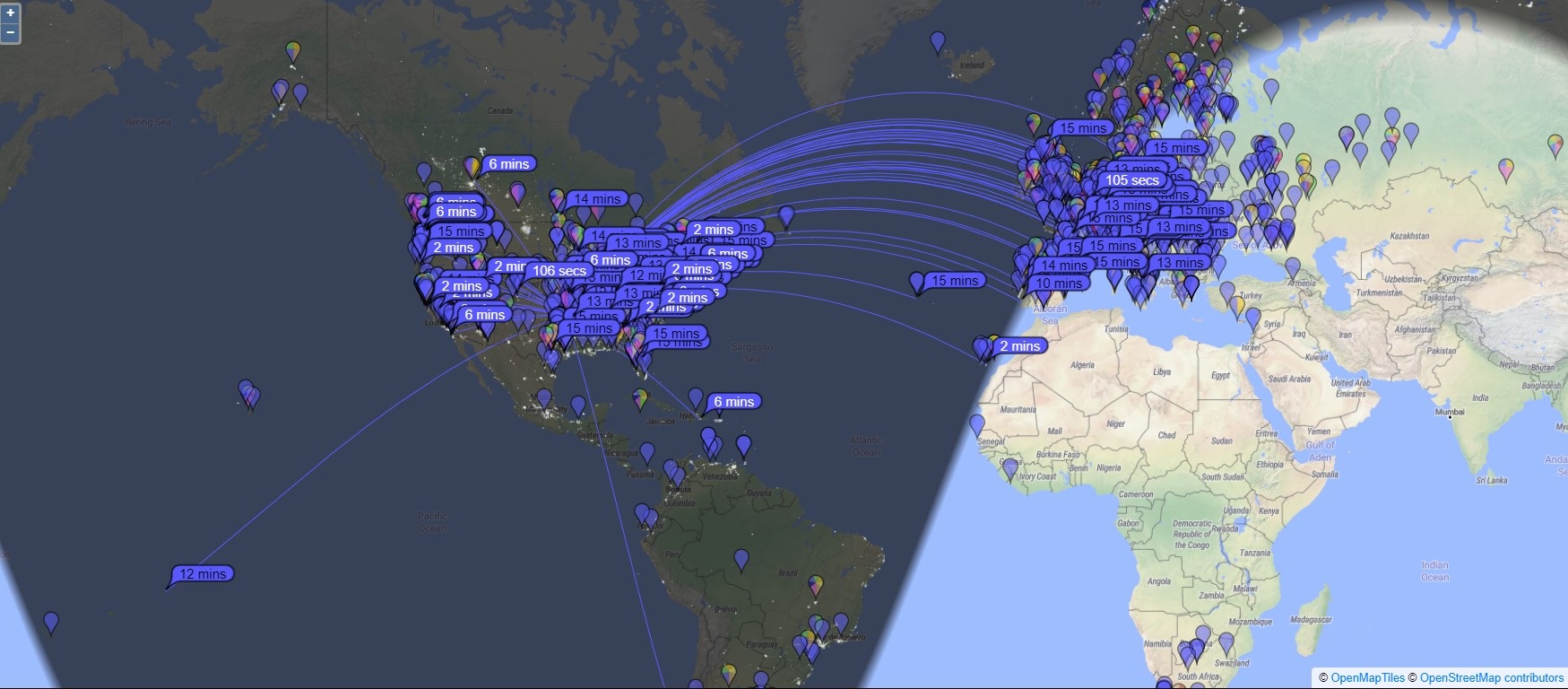
- Stronger long-haul paths (especially transatlantic)
- Classic low-angle “spray” on reception maps
- Often a bit higher noise floor — but still decoding fine
OFC Dipole: Dense NA Coverage
- More regional + mid-distance stations
- Often cleaner receive
- Less deep-DX compared to the vertical during this test window
PSKReporter Map Evidence
Below is where the comparison gets real. I ran the vertical first, then switched to the dipole. Same band, same mode, same station — just a different antenna.
Why FT8 Is Perfect for Antenna A/B Testing
- Weak-signal decoding makes differences show up quickly
- Consistent timing reduces “human” variables
- Huge reporting network (PSKReporter) gives a real map of performance
- Back-to-back runs keep propagation changes minimized
My Takeaway
This test reinforced something I’ve learned over and over in ham radio: the “best” antenna depends on what you’re trying to do.
- If I’m chasing DX on 40m FT8, the Xiegu VG4 vertical is a monster.
- If I want strong North America coverage with a cleaner receive, the dipole still rules.
Bottom line: I’m glad I have both. The VG4 has earned a spot in my lineup, and the OFC dipole remains my dependable workhorse.
← Back to Articles